

PU Injection Grouting for Water Leaks: When It Works and When It Doesn’t
Water entering through a concrete crack can move quickly, especially in a basement, retaining wall, lift well or water-retaining structure. PU injection grouting in Sri Lanka offers a practical way to seal many active water paths without excavating the outside face. Its success, however, depends on diagnosis and controlled installation.
Polyurethane grout is a reactive resin. Selected formulations encounter moisture, expand and cure within a crack or void. The cured material blocks the path through which water travels. That makes PU injection different from applying sealant over the visible surface.
Where PU injection grouting often works well
- Active water seepage through concrete cracks
- Leaks at selected construction joints and wall-to-slab junctions
- Water entry through tie holes or local honeycombed areas
- Basements, retaining walls, tunnels and lift wells with limited external access
- Localised leaks in concrete water tanks, subject to the complete repair specification
How the injection process works
- Inspect the structure and trace the likely water path.
- Mark the crack or joint and choose suitable drilling positions.
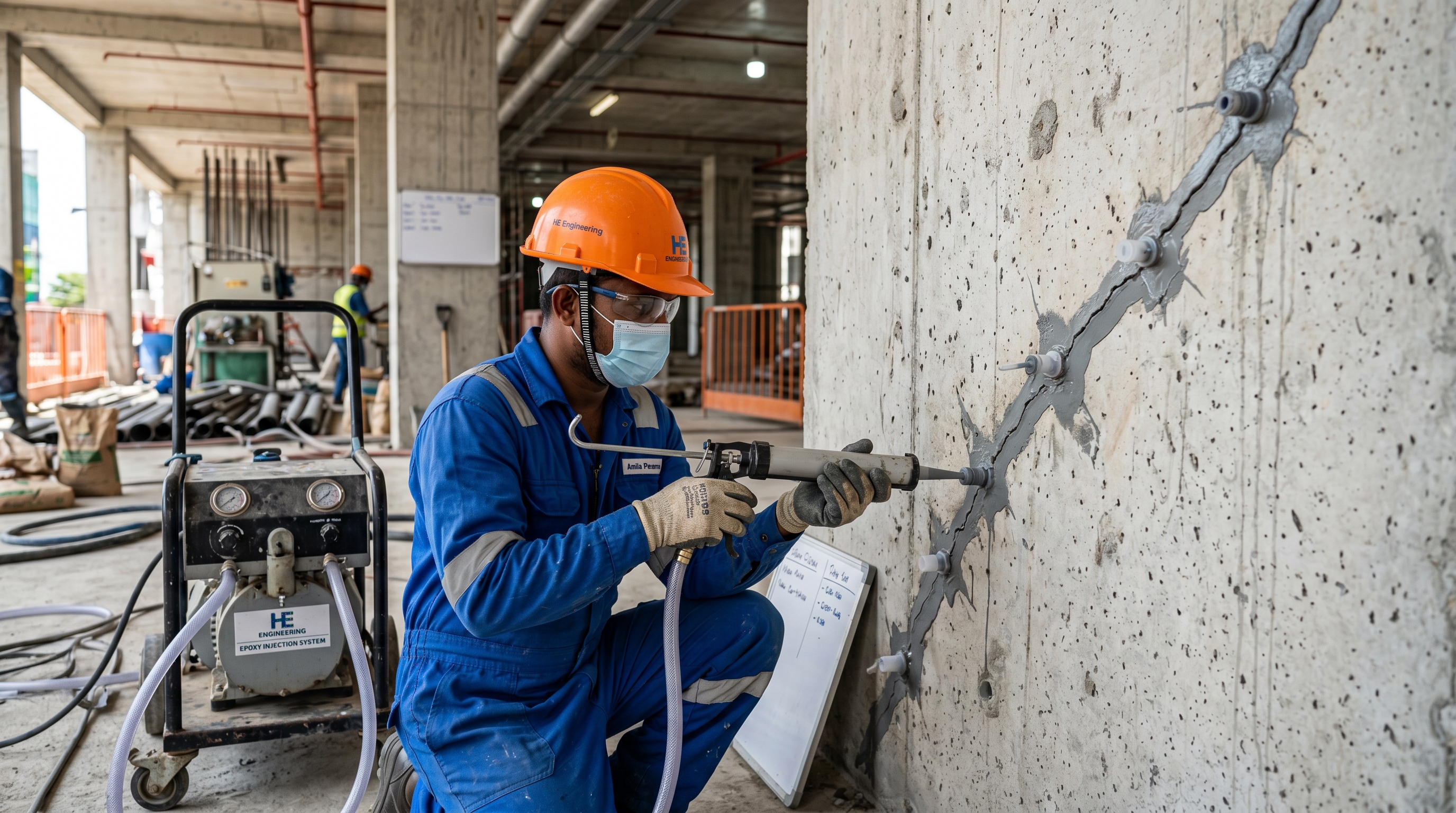
- Install mechanical packers that connect the pump to the defect.
- Inject the selected PU resin at controlled pressure and sequence.
- Allow the material to react, then repeat injection where required.
- Remove the packers, make good the holes and inspect the treated area.
The drilling angle, packer spacing, material reaction time and pressure depend on the crack, wall thickness and water flow. Excessive pressure can create new damage or drive resin away from the target. Experienced operators adjust the process as the structure responds.
When PU injection is the wrong answer
A structural crack needs structural assessment
Flexible PU grout can seal water, but it does not automatically restore structural continuity. A dormant structural crack may require epoxy injection after an engineer assesses its cause and stability. Active movement may require a flexible joint detail or broader strengthening work.
Widespread porous concrete needs broader repair
Injection can treat defined paths, but extensive honeycombing, deteriorated concrete or widespread dampness may need removal, patch repair and a compatible waterproofing system. Chasing every new wet spot with isolated injection holes rarely solves a building-wide defect.
Drainage or plumbing defects must be corrected
Blocked outlets, failed pipework and uncontrolled groundwater can keep imposing avoidable water loads. Injection may stop one route while water finds another. Repair the source or improve drainage whenever access and design allow.
PU versus epoxy injection
PU and epoxy solve different problems. PU formulations can react in damp conditions and remain capable of accommodating limited movement, making them useful for active leakage. Epoxy forms a strong bond and may restore continuity across suitable dry, dormant cracks. The defect—not the material already on the contractor's truck—should decide the method.
What a proper assessment should record
- Crack width, pattern, depth and evidence of movement
- Whether leakage is active, intermittent or linked to rainfall
- Concrete thickness and access to each face
- Nearby joints, penetrations, drains and previous repairs
- Signs of corrosion, spalling or structural distress
- The intended finish and service conditions after repair
Frequently asked questions
Will injection stop a leak immediately?
Fast-reacting PU can reduce active flow during application, but complete treatment may require staged injection and follow-up inspection. Water can reveal another connected path after the main leak closes.
Can PU injection repair every concrete crack?
No. The method is designed mainly to seal water paths and voids. Structural, moving or widespread defects require a repair specification that addresses their cause and required performance.
Specialist injection grouting in Sri Lanka
H.E. Engineering provides polyurethane, epoxy and cementitious injection grouting as part of its waterproofing and concrete-repair services. Our team assesses the defect, selects the appropriate material and integrates injection with joint treatment, patch repair or protective coatings where the structure needs a broader solution.