
Basement Waterproofing in Sri Lanka: Systems, Warning Signs and Repair Options
Basements, lift wells and retaining walls sit in direct contact with soil and groundwater. When water builds up outside the structure, it can enter through cracks, joints, penetrations or porous concrete. Effective basement waterproofing in Sri Lanka must account for this pressure as well as heavy seasonal rain and variable ground conditions.
Below-ground leaks deserve early attention because access becomes difficult after backfilling, landscaping and interior finishes. The correct solution depends on whether waterproofing is being designed for new construction or repaired from inside an existing basement.
Warning signs of basement water ingress
- Dark or damp patches that grow after rain
- White crystalline deposits on concrete or masonry
- Peeling paint, blistered coatings or loose plaster
- Water emerging through wall-to-floor joints or tie holes
- Rust staining, cracking or concrete spalling
- Persistent musty odours, mould or high indoor humidity
- Standing water near drains, sumps or lift wells
Find the water path before choosing a product
The visible damp patch may sit far from the entry point. Water can travel along reinforcement, construction joints and interfaces before reaching the interior. Review external drainage, ground levels, rainwater pipes, nearby plumbing and the timing of each leak. Map active cracks and joints during wet conditions when possible.
Basement waterproofing for new construction
Sheet membrane systems
Pre-applied or post-applied sheet membranes create a continuous barrier outside the structure. Careful laps, terminations and penetration details are essential. The membrane also needs protection from reinforcement work, backfilling and following trades.
Bentonite geotextile systems
Bentonite layers swell when hydrated and can form a low-permeability barrier against the concrete. They suit selected below-ground applications, but confinement, overlap detailing and water chemistry must match the manufacturer's requirements.
Crystallisation and integral approaches
Crystalline treatments react within the concrete's pore structure, and integral admixtures become part of the concrete mix. These approaches can complement sound concrete design, joint waterstops and crack control. They cannot compensate for poor consolidation or neglected construction joints.
Repair options for an existing leaking basement
Injection grouting
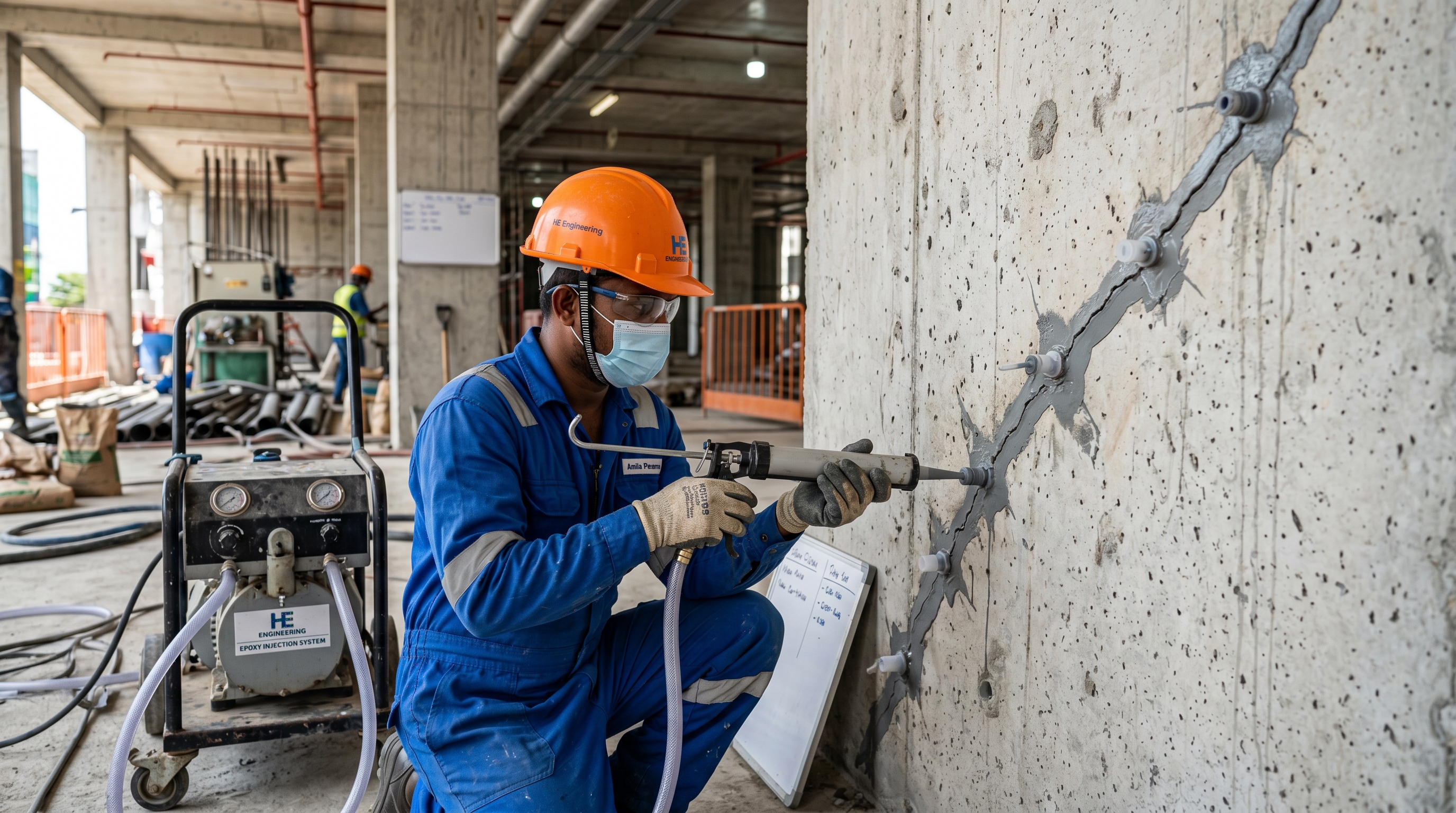
Polyurethane injection can stop active water flow through selected cracks and joints. Epoxy injection may restore structural continuity in suitable dry, dormant cracks. The contractor should identify the defect and select the resin, pressure and injection pattern accordingly.
Negative-side waterproofing
When the outside face is inaccessible, a contractor may apply a compatible system to the internal face. This approach must resist water pushing through the substrate, so surface strength and product selection matter. It should form part of a repair strategy that also treats active paths and joints.
Drainage and water management
Some structures need drainage channels, sumps or pumps to manage water alongside waterproofing. External grading and functioning stormwater systems can reduce the load on basement walls. A design that controls both water entry and water accumulation provides stronger protection.
Details that commonly fail
- Wall-to-slab and wall-to-wall construction joints
- Pipe sleeves, service penetrations and formwork tie holes
- Movement joints without a suitable waterstop or sealant
- Membrane laps and terminations damaged before backfilling
- Honeycombed concrete and poorly compacted repair areas
- Drainage outlets or pumps without maintenance access
Questions to ask a basement waterproofing contractor
- What evidence identifies the source and pressure of the water?
- Why does the proposed system suit positive-side or negative-side exposure?
- How will joints, penetrations and active cracks be treated?
- What substrate repairs and surface preparation are included?
- How will the work be inspected, tested and protected?
- What maintenance does the drainage or pumping system require?
A coordinated below-ground solution
H.E. Engineering undertakes basement, retaining-wall and lift-well waterproofing for new and existing structures. Our specialists combine membranes, coatings, joint treatments, concrete repair and injection grouting according to site conditions. Early technical involvement helps designers and owners resolve difficult details before they disappear behind the completed work.