


Balcony Waterproofing in Sri Lanka: Common Leak Points and Repair Methods
A leaking balcony can stain the ceiling below, damage wall finishes and keep adjoining rooms damp long after rain stops. The visible stain rarely identifies the exact entry point. Effective balcony waterproofing in Sri Lanka begins by tracing how rain moves across tiles, joints, thresholds, outlets and the concrete slab.
Balconies face heavy rain, direct sunlight and daily temperature changes. They also contain many vulnerable details in a small area. A sound repair must manage surface drainage, movement and waterproofing as one assembly.
Where balcony leaks usually begin
Door thresholds and wall junctions
Water can enter where the balcony meets an external wall or door frame. Low upstands, cracked sealant and waterproofing that stops below the finished surface leave these junctions exposed during wind-driven rain.
Outlets and poor drainage falls
A blocked outlet or flat area holds water against joints and finishes. Membranes must connect securely to outlets, and the finished surface must drain without prolonged ponding. Adding another coating cannot correct badly formed falls.
Cracked tiles, grout and screed
Tiles and grout shed routine surface water, but they are not the primary waterproof layer. Cracks allow more water into the screed and reveal movement or debonding. The membrane beneath should protect the slab even when a surface joint deteriorates.
Balustrade posts and penetrations
Fixings that pass through the finished surface create direct water paths unless the design seals and maintains them. Side-mounted balustrades often reduce penetrations through horizontal waterproofing, but every project needs a detail suited to its structure.
How to diagnose a balcony leak
- Record when and where dampness appears during rain.
- Inspect outlets, falls, thresholds, joints and wall connections.
- Check tiles and screed for cracks, drummy areas and failed sealant.
- Review balustrade fixings, pipe penetrations and previous patches.
- Use controlled testing only after protecting the rooms below and isolating likely zones.
- Confirm the repair scope before removing finishes or applying a coating.
Water can travel through a saturated screed before appearing inside. Testing the whole balcony at once may confirm a leak without locating it. A staged investigation gives the contractor more useful evidence.
Balcony waterproofing repair options
Rebuild the system beneath the tiles
When the membrane, screed or details have failed widely, the durable solution may require removing tiles and unsound layers. The contractor can then repair the substrate, reform drainage falls, treat junctions and apply a compatible flexible membrane before reinstating the finish.
Apply a compatible exposed membrane
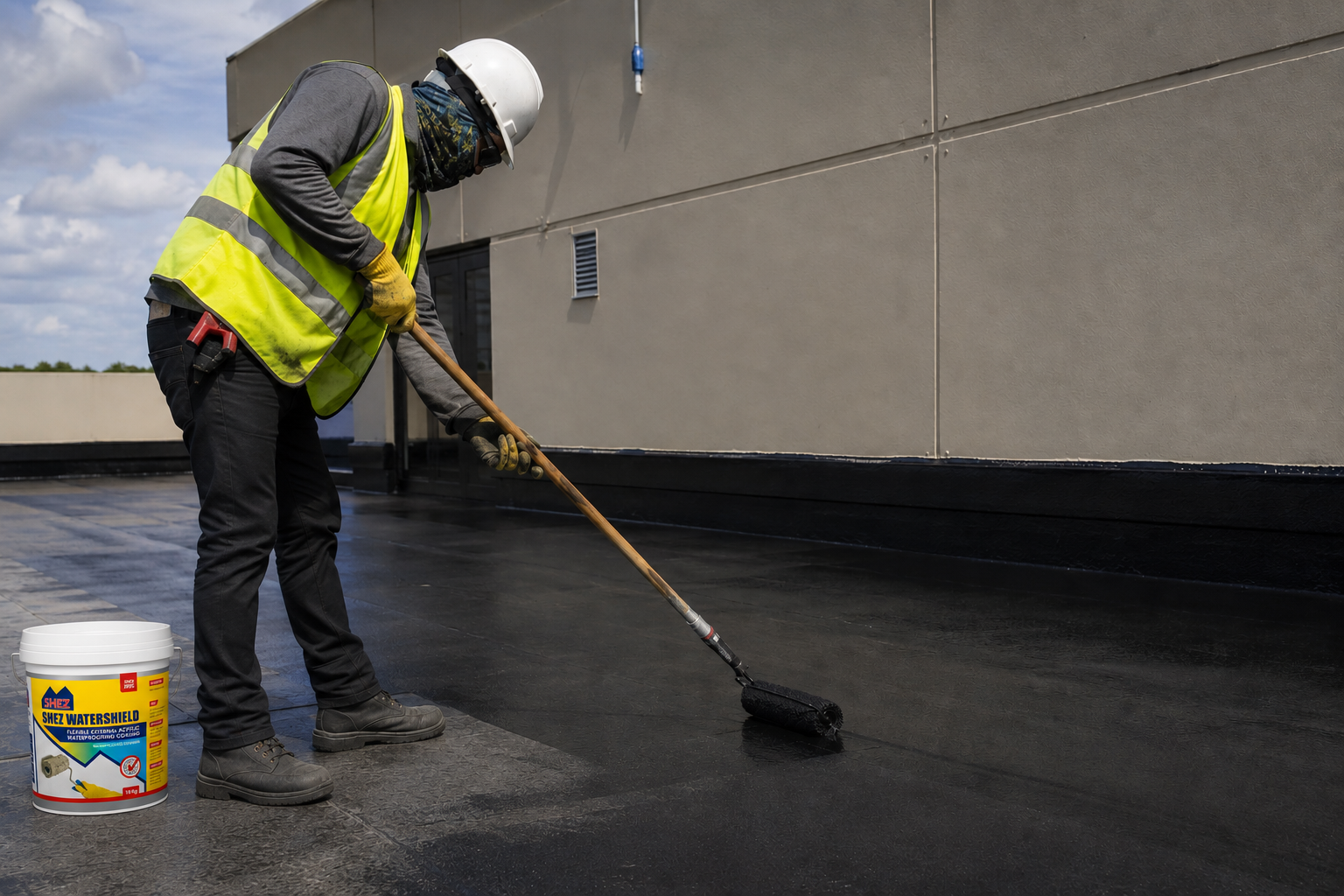
Selected liquid-applied systems can form an exposed waterproof surface when the balcony use, substrate and appearance allow it. The specification must address ultraviolet exposure, slip resistance, foot traffic, movement and termination details.
Use a local repair only for a local defect
A failed sealant joint, isolated penetration or damaged outlet may support a focused repair when the surrounding build-up remains sound. Local patches perform poorly when water has spread through the screed or several details have deteriorated.
Details a reliable proposal should include
- Removal and disposal of failed finishes or screed
- Crack repair and preparation of the structural substrate
- Falls toward outlets and overflow provisions where required
- Reinforced treatment at corners, thresholds and penetrations
- Specified membrane coverage, thickness and curing time
- Protection before tiling and compatibility with tile adhesive
- Inspection or controlled water testing before handover
Frequently asked questions
Can clear waterproofing stop a balcony leak?
A compatible clear treatment can help in selected situations, but it cannot rebuild failed falls, moving joints, loose tiles or a damaged membrane. Diagnosis should determine whether the defect is genuinely superficial.
Must all balcony tiles be removed?
Not always. The decision depends on the leak path and condition of the tiles, screed, membrane and details. Widespread saturation or debonding often makes removal the more reliable route.
Repair the water path, not only the stain
H.E. Engineering investigates and repairs balcony waterproofing for homes, apartments, hotels and commercial buildings. Our team coordinates drainage, concrete repair, membranes, sealants and finishes to address the complete leak path. Contact us for a site assessment and a defined repair proposal.