
Roof Heat Insulation in Sri Lanka: How Cool Roof Systems Reduce Heat Gain
Sri Lankan roofs absorb strong solar radiation for much of the year. The heated roof transfers energy into the rooms below, raising indoor temperatures and increasing the work required from air-conditioning. Effective roof heat insulation in Sri Lanka controls this heat at the building envelope instead of relying only on mechanical cooling.
No single roof treatment suits every building. Reflective coatings, insulation boards, sprayed materials, radiant barriers and ventilated roof spaces control different parts of the heat-flow path. The correct build-up must also preserve drainage and waterproofing performance.
How heat enters through a roof
Sunlight heats the outer roof surface. The roof then conducts heat through the slab or sheeting and radiates heat toward the occupied space. Dark exposed surfaces often absorb more solar energy than light, reflective surfaces. Insulation slows heat conduction, and ventilation can remove some heat before it reaches the interior.
What is a cool roof?
A cool roof uses a surface designed to reflect a larger share of sunlight and release absorbed heat efficiently. Reflective acrylic or other specified coatings can lower the roof surface's heat build-up. Performance depends on product properties, coverage, substrate condition, colour, cleanliness and exposure.
A reflective coating reduces solar gain but does not replace bulk insulation in every building. Warehouses, offices, homes, factories and cold rooms have different internal loads and comfort targets. Treat reflectance and insulation as complementary design choices.
Common roof heat-control options
Reflective roof coatings
These liquid-applied finishes suit selected concrete and metal roofs. They can cover complex shapes and renew an existing compatible surface. The substrate must be clean, sound and dry enough for the specified product, and the finished coating needs periodic inspection and cleaning.
Rigid insulation boards
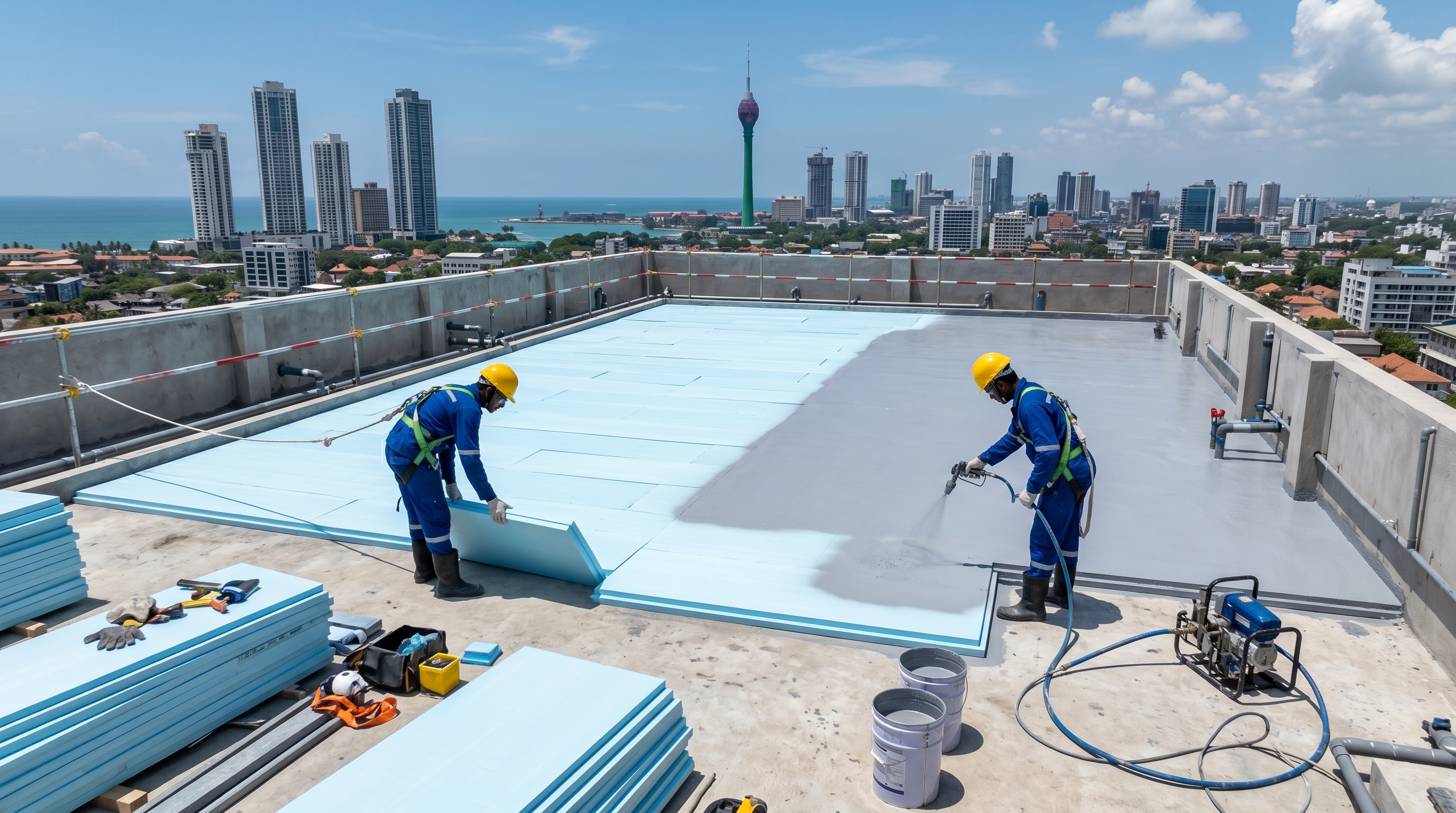
Insulation boards can form part of warm-roof, inverted-roof or metal-roof assemblies. Designers must specify compressive strength, moisture resistance, joints, fixings, fire performance and protection according to the roof use. Poorly coordinated boards can obstruct drainage or create vulnerable membrane details.
Insulation beneath metal roofs
Factories and warehouses often use insulation blankets, boards or sprayed systems beneath metal sheeting. Condensation control matters as much as heat flow. Vapour layers, sealed joints and ventilation must suit the indoor humidity and roof construction.
Shading and ventilation
Ventilated cavities, raised roofs and external shading reduce the heat that reaches the occupied space. These passive measures can strengthen a broader insulation strategy, especially when the project can address them during design rather than after completion.
Coordinate insulation with waterproofing
Water can damage insulation, reduce thermal performance and conceal membrane defects. The roof build-up must define where the waterproofing sits, how vapour moves, how rain reaches outlets and how technicians will access the surface. Upstands, penetrations, expansion joints and drainage details must work across every layer.
Existing roofs need a condition survey before coating or insulation. Repair cracks, corrosion, loose screed, failed sealants and active leaks first. Adding a reflective finish over an unstable or incompatible surface creates a short-lived result.
How to choose a roof heat solution
- Identify the roof type, condition, slope and drainage arrangement.
- Measure or estimate the heat and moisture loads inside the building.
- Set targets for comfort, process temperature or cooling demand.
- Compare complete roof build-ups, not isolated product claims.
- Check compatibility with waterproofing, fire and maintenance requirements.
- Plan safe access, inspection and renewal throughout the system's service life.
Questions for homes and commercial buildings
- Which rooms become hottest, and at what time of day?
- Is the roof concrete, metal, tile or a mixed construction?
- Does the roof already leak or hold standing water?
- Will people walk on the roof or install equipment above it?
- Does the building use air-conditioning continuously or only at selected times?
- Can the proposal be inspected and maintained without damaging the membrane?
Frequently asked questions
Will white roof paint insulate a building?
A suitable reflective coating can reduce solar heat absorption, but ordinary paint does not provide the same tested properties or durability. Reflective coatings also perform a different role from materials that resist heat conduction through thickness.
Can a cool roof coating stop leaks?
Only a product specified and detailed as part of a waterproofing system should be expected to resist water entry. Repair defects and confirm product compatibility rather than treating reflectivity as proof of waterproofing performance.
Integrated roof protection from H.E. Engineering
H.E. Engineering designs and installs thermal-insulation, heat-reflective coating and waterproofing solutions for homes, commercial buildings and industrial facilities. Our team assesses the existing roof, operating conditions and maintenance needs before recommending a coordinated build-up for Sri Lanka's tropical climate.