

Food-Grade Flooring in Sri Lanka: Choosing Floors for Processing Facilities
Floors in food and beverage facilities carry people, trolleys, forklifts, hot liquids, oils, cleaning chemicals and repeated wash-down cycles. A finish chosen for appearance alone can crack, soften, become slippery or separate from the concrete. Food-grade flooring in Sri Lanka needs a specification based on the process in each room.
A hygienic floor should provide a continuous, cleanable surface with details that limit places where residue and moisture collect. The complete facility must still follow its applicable food-safety, occupational-safety and operational requirements; a flooring product alone does not make a facility compliant.
Map the operating conditions before choosing a floor
Divide the facility into production zones and document what each floor faces. A dry-packaging room, cold store, cooking line, loading bay and chemical store may need different systems. Record traffic, impact, temperature, cleaning, drainage, contamination and slip risks for every zone.
Performance requirements that matter
Cleanability and seamless detailing
Resin flooring can form a continuous surface with fewer joints than tile. Integral coves turn the floor up at walls and help eliminate hard-to-clean corners. Penetrations, drains and equipment bases need sealed details that tolerate cleaning and movement.
Slip resistance
Texture improves grip in wet or greasy conditions, but a rougher floor can take more effort to clean. Match the finish to the actual contaminant, footwear, slope and cleaning method. Sample areas can help operators assess this balance before full installation.
Thermal shock
Hot wash water or steam hitting a cool slab creates rapid movement. Cold rooms and areas near ovens add further temperature change. Polyurethane-cement systems often suit severe thermal cycling better than rigid general-purpose coatings, subject to the selected product's data.
Chemical and stain resistance
Fats, sugars, organic acids, detergents, sanitisers and process chemicals affect resins differently. Give the flooring supplier a complete chemical list with concentrations, temperatures and contact times. Generic claims of chemical resistance provide too little information for selection.
Impact and traffic
Dropped tools, metal wheels, pallets and forklift turning place concentrated stress on the floor. Thickness, aggregate, reinforcement at joints and the condition of the underlying slab all influence durability under heavy traffic.
Epoxy versus polyurethane-cement flooring
Epoxy systems provide a hard, seamless and attractive finish for many dry or moderate-duty areas. Polyurethane-cement systems better tolerate thermal shock, moisture and many organic acids in demanding wet-process zones. Facilities often use both, matching each system to the room instead of forcing one specification across the building.
The concrete slab controls the result
Resin flooring bonds to the prepared substrate. Weak laitance, oil contamination, rising moisture, cracks and moving joints can cause failure even when the resin itself is suitable. Mechanical preparation exposes sound concrete and creates the profile needed for adhesion.
New concrete must reach the condition required by the flooring manufacturer. Existing slabs may need moisture testing, degreasing, crack repair, joint treatment or a moisture-control layer. These tasks belong in the flooring programme, not as last-minute extras.
Drainage and transition details
Floor falls should move wash water toward suitable drains without creating ponding. Drain edges, thresholds and transitions between systems receive repeated impact and cleaning. Robust termination details protect these boundaries from early breakdown.
Questions for a flooring contractor
- Which system is proposed for each production zone, and why?
- What substrate preparation and moisture testing are included?
- How will cracks, joints, drains, coves and equipment bases be detailed?
- Which chemicals and service temperatures has the supplier considered?
- What slip-resistant finish suits the cleaning process and contamination risk?
- How long must production stop for installation, curing and return to service?
- What inspection, cleaning and repair plan will preserve the floor?
Plan installation around production
Shutdown time, odour control, access, food-area isolation and curing influence the installation sequence. Phased work may keep part of a facility operating, but every phase needs protected boundaries and enough time to cure before traffic and cleaning resume.
Frequently asked questions
Is every seamless epoxy floor food-grade?
No. Suitability depends on the specific product, installed system, intended zone and applicable requirements. Review current technical and compliance documents rather than relying on the word seamless.
Can resin flooring be installed over old tiles?
Some systems may be installed over a sound, prepared substrate, but loose tiles, contaminated joints and trapped moisture create serious risks. A site survey and adhesion assessment should decide whether removal is necessary.
Industrial flooring designed for the process
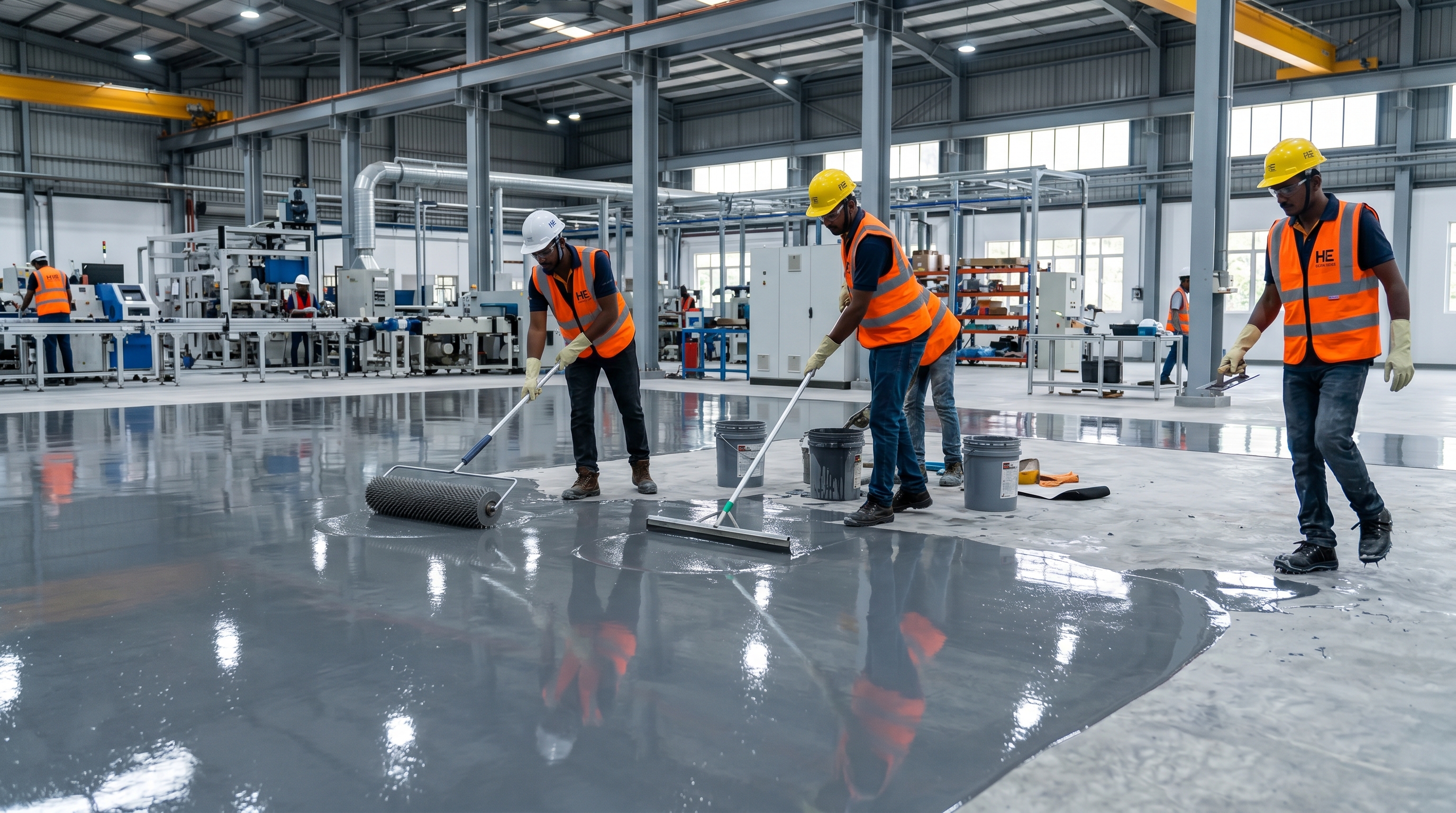
H.E. Engineering supplies and installs epoxy and polyurethane flooring for food processing, beverage, pharmaceutical, healthcare and other industrial environments. Our team assesses the slab and operating conditions, prepares the substrate and coordinates hygienic details around drains, coves and equipment.