
Concrete Spalling Repair in Coastal Buildings: A Guide for Sri Lanka and the Maldives
Concrete spalling begins when part of the surface cracks, delaminates or breaks away. In coastal buildings, persistent moisture and chloride salts can accelerate corrosion of embedded reinforcement. Rust occupies more volume than the original steel and pushes against the concrete cover until it cracks and falls.
Timely concrete spalling repair in Sri Lanka and the Maldives protects people from falling material and limits further structural deterioration. Painting over the damaged area hides the warning but leaves the corrosion process active beneath the finish.
Why coastal concrete deteriorates
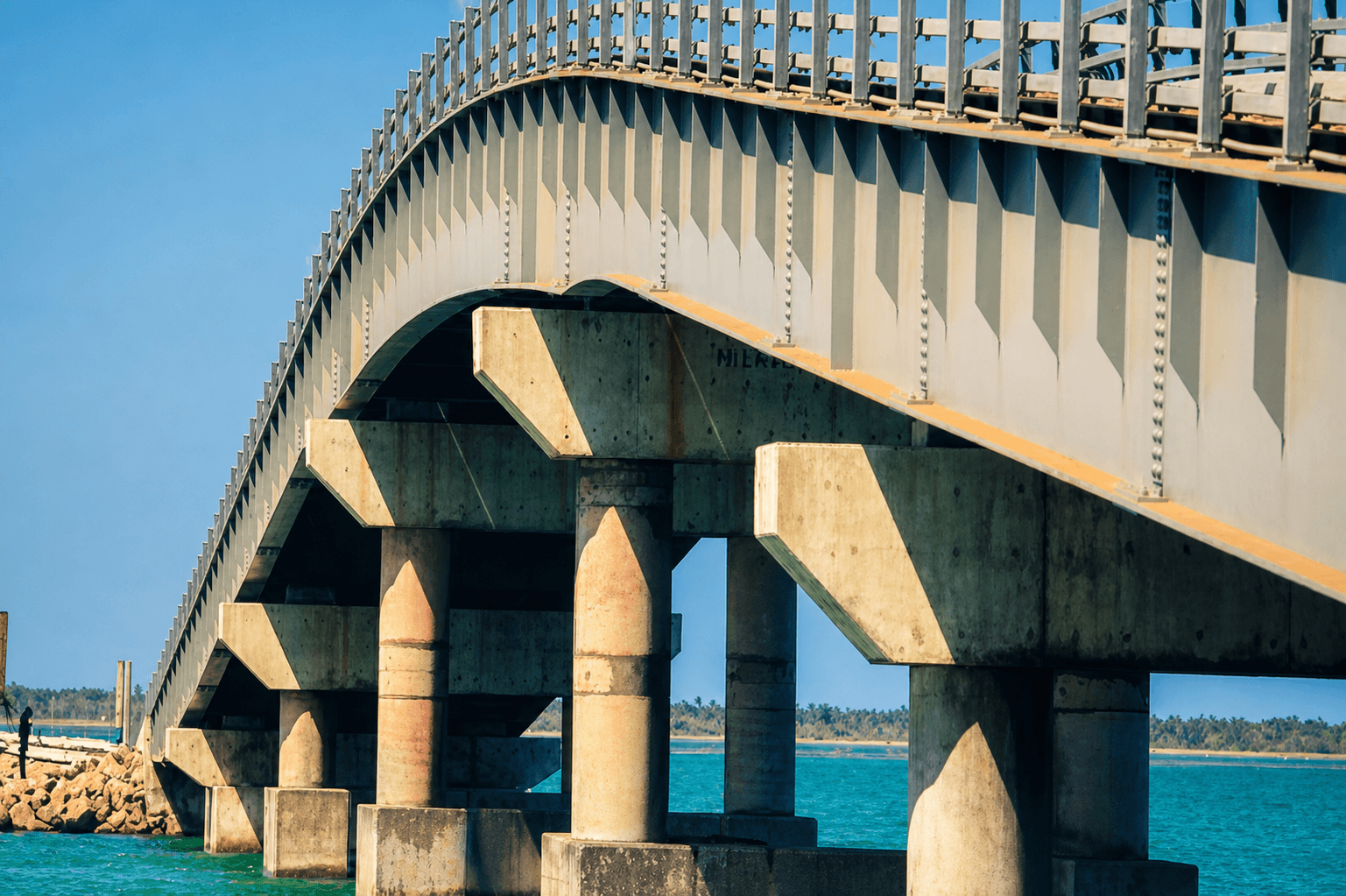
Sound concrete protects steel through its naturally alkaline environment. Carbon dioxide gradually lowers this protection through carbonation. Chlorides from sea spray, windborne salt or contaminated water can also reach the steel. Once moisture and oxygen support corrosion, expanding rust disrupts the surrounding concrete.
Cracks, porous concrete, inadequate cover, failed joints and leaking façades shorten the path to the reinforcement. Balconies, parapets, slab edges, soffits and exposed columns often show damage first because they receive direct weather and retain moisture around details.
Signs that need professional assessment
- Rust-coloured stains along cracks or reinforcement lines
- Hollow areas that sound different when surveyed
- Long cracks running parallel to reinforcing bars
- Loose concrete on balconies, soffits, beams or columns
- Exposed steel with visible section loss
- Recurring damage around joints, drainage points or façade cracks
Loose overhead concrete creates an immediate safety risk. Secure the area and arrange an inspection before removing material. An engineer should assess damage that affects structural capacity, widespread reinforcement or critical members.
How specialists assess spalled concrete
A condition survey maps cracks, delamination, exposed steel and moisture sources. Depending on the structure, the assessment may include cover measurements, carbonation-depth testing, chloride sampling, corrosion-potential surveys and reinforcement measurements. These findings define the repair boundary and reveal whether local patching will be enough.
The concrete spalling repair process
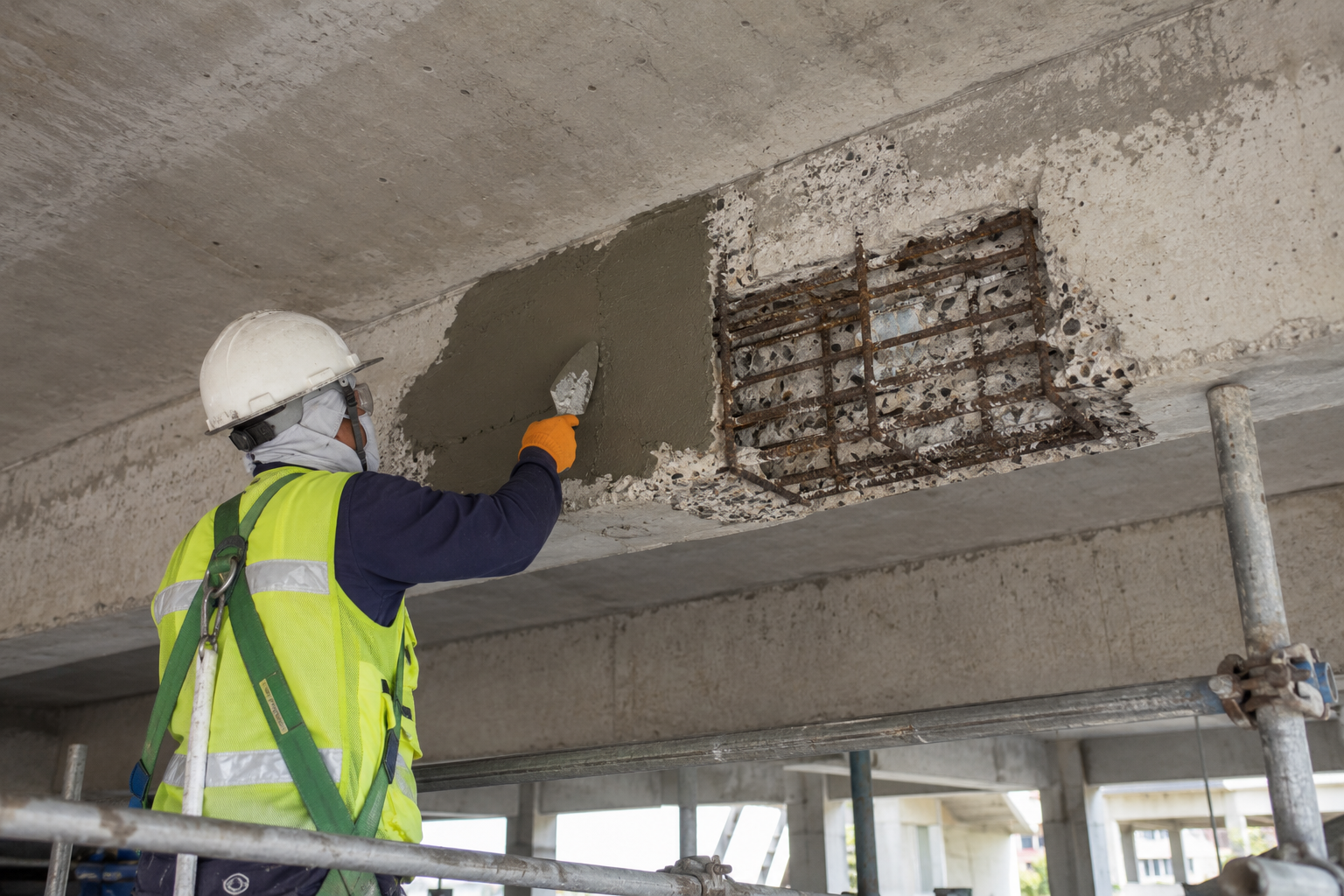
- Mark the full extent of unsound and delaminated concrete.
- Remove defective material to a sound, well-defined repair boundary.
- Expose enough reinforcement to clean the steel properly.
- Assess steel loss and replace or supplement bars when the engineer specifies it.
- Clean the reinforcement and apply the specified corrosion protection.
- Prepare the concrete and rebuild the section with compatible repair mortar or micro-concrete.
- Cure the repair and apply protective treatments where required.
Why some patch repairs fail
- The contractor removes only visibly loose material and leaves delaminated edges.
- Corrosion continues on steel that was poorly cleaned or remained behind the repair.
- The repair mortar has incompatible strength, shrinkage or thermal behaviour.
- Poor preparation weakens the bond between old concrete and new material.
- Leaks, joints and chloride exposure remain untreated after patching.
- Inadequate curing causes shrinkage cracks and weakens the repair surface.
Protecting repaired concrete in coastal exposure
Repair restores damaged sections; protection slows the conditions that caused the damage. Depending on the survey, the wider strategy may include anti-carbonation coatings, water-repellent impregnation, crack and joint sealing, waterproofing, corrosion-control measures or improved drainage. Coating selection should account for vapour movement, ultraviolet exposure and chloride resistance.
Plan repairs across the whole building
Scattered patches can signal a common exposure problem rather than isolated defects. Building owners and facility managers should prioritise immediate hazards, then group remaining work by elevation, component and severity. A phased repair plan helps control access costs and prevents urgent defects from disappearing inside a general maintenance budget.
Frequently asked questions
Can spalled concrete be filled with ordinary cement mortar?
A repair material must bond to the existing concrete and meet the required strength, shrinkage, thickness and exposure conditions. Ordinary mortar applied over corroded steel rarely provides a durable repair.
Does a protective coating replace concrete repair?
No. Coatings protect a sound, prepared substrate. Loose concrete, active corrosion, cracks and failed joints require repair before the protective system is applied.
Concrete rehabilitation for demanding environments
H.E. Engineering provides condition-led concrete repair and rehabilitation across Sri Lanka and the Maldives. Our capabilities include crack injection, patch repair, micro-concrete, corrosion treatment, structural strengthening and protective coatings. We develop the method around the defect, exposure and required service life rather than treating the visible patch alone.