

Carbon Fibre Wrapping for Concrete Structural Strengthening
Building loads and uses change. New equipment, alterations, design deficiencies, corrosion or accidental damage may leave an existing member needing more capacity. Carbon fibre strengthening in Sri Lanka offers a lightweight option where adding thick concrete or steel would create access, weight or programme difficulties.
CFRP is not a generic wrap applied by eye. Fibres are strongest in their designed direction, and the bond to the concrete transfers force into the system. Engineering design, substrate condition and installation quality are therefore inseparable.
What is a carbon-fibre strengthening system?
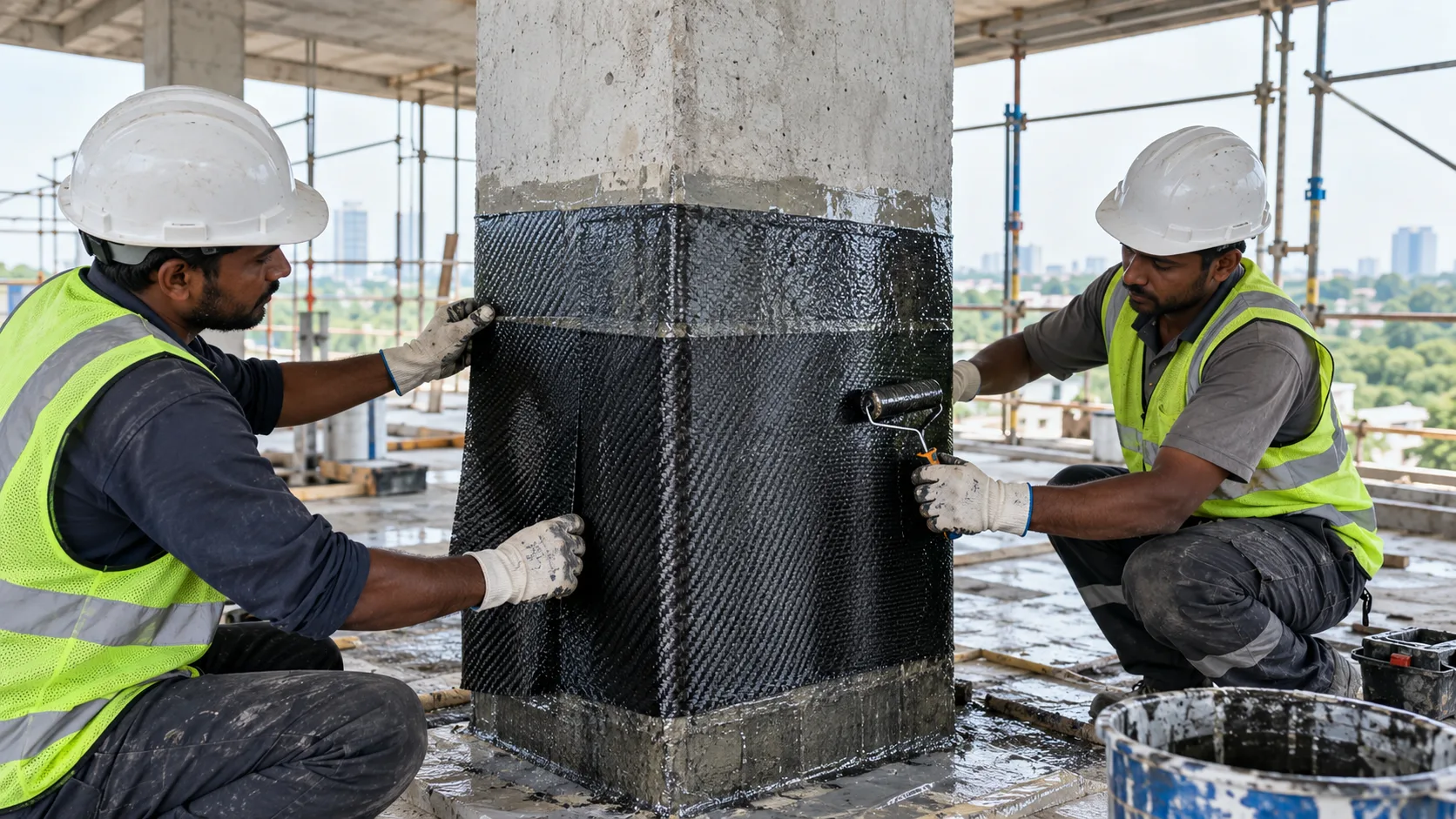
A typical externally bonded system combines carbon-fibre fabric or pultruded strips with a compatible resin. The resin saturates or bonds the fibres and transfers stress to the prepared concrete. Different layouts can address flexure, shear or confinement, subject to design and site conditions.
Where carbon fibre may be used
- Flexural strengthening of selected beams and slabs
- Shear strengthening at beam webs or critical zones
- Confinement of columns to improve selected performance characteristics
- Strengthening around carefully designed slab openings
- Rehabilitation after deterioration has been repaired
- Capacity upgrades associated with a verified change of use or loading
Assessment comes before strengthening
The engineer needs reliable information about geometry, reinforcement, concrete strength, damage, loads and support conditions. Testing and local opening may be needed where drawings are incomplete. Active corrosion, delamination, major cracking or weak concrete must be understood before a bonded system is specified.
Strengthening one element can move demand elsewhere in the structure. The design should check the complete load path, failure modes, anchorage zones, fire exposure, environmental conditions and what happens if the fibre system is damaged in service.
How carbon-fibre wrapping is installed
- Set out the engineer's approved fibre locations and orientations.
- Remove coatings, laitance and weak concrete from the bond area.
- Repair cracks, spalls and corrosion damage using compatible materials.
- Round sharp corners to the specified radius where fabric wraps a member.
- Check surface profile, dryness, cleanliness and pull-off strength as required.
- Apply primer, levelling resin, fibre and saturation resin in the approved sequence.
- Consolidate the laminate, remove trapped air and inspect laps and terminations.
- Apply fire, ultraviolet or impact protection where the design requires it.
Why surface preparation controls performance
The CFRP may be stronger than the concrete beneath it. If the surface is dusty, damp, uneven or weak, the system can debond before the fibres reach their intended capacity. Preparation should create a sound, properly profiled bond surface without damaging the member.
Advantages of CFRP strengthening
- Very high strength with little additional dead load
- Thin build-up that preserves headroom and usable space
- No corrosion of the carbon fibres
- Installation around complex shapes using fabric systems
- Less heavy handling than many steel strengthening methods
- Potentially shorter shutdowns when access and curing are well planned
Important limitations and protection
CFRP is not suitable for every defect or loading problem. Bonded systems depend on concrete strength and anchorage, resins have temperature limits, and exposed laminates may need protection from fire, sunlight, impact or vandalism. Moisture and service conditions must suit the selected materials.
Carbon fibre also does not remove corroded reinforcement or rebuild missing concrete. Complete the necessary concrete repair and corrosion treatment first, then install the strengthening system on the repaired, verified substrate.
Quality control during installation
Document product batches, ambient conditions, substrate readings, mixing, fibre orientation, laps and curing. Inspect for wrinkles, dry fibres, voids and poor terminations. Project requirements may include trial areas, pull-off testing or other checks defined by the engineer and system supplier.
Carbon-fibre strengthening FAQs
- Is carbon-fibre wrapping stronger than steel jacketing?
- They behave differently and suit different constraints. The engineer should compare capacity, stiffness, fire resistance, anchorage, access, corrosion exposure and constructability for the specific member.
- Can CFRP repair a cracked concrete beam?
- Cracks must first be diagnosed and treated as required. CFRP may form part of a designed strengthening solution, but wrapping a crack without addressing its cause is not a complete repair.
- Can carbon fibre be painted over?
- Compatible protective and architectural finishes can be specified, but they must not compromise inspection, bond or required fire and environmental protection.
Structural strengthening by H.E. Engineering
H.E. Engineering installs fibre-wrap, fibre-strip, micro-concrete and other concrete rehabilitation systems in Sri Lanka and the Maldives. We work to the engineer's approved design and coordinate repair, preparation, installation, inspection and protective finishing.