
Choosing the Right Tile Adhesive for Floors, Bathrooms and Outdoor Areas
Tile adhesive is easy to overlook because once the project is complete, it is hidden. Yet the adhesive is the layer responsible for transferring loads between the tile and substrate while coping with moisture, temperature changes and movement.
Choosing tile adhesive by price alone can lead to debonding, hollow tiles, cracked finishes and costly rework. The correct choice begins with the application.
Why traditional assumptions are no longer enough
Modern tiles vary greatly in size, porosity, weight and composition. Large-format porcelain, natural stone and dense vitrified tiles behave differently from smaller, more absorbent ceramic tiles.
At the same time, substrates have become more varied: concrete, screeds, plastered walls, waterproofing membranes and existing finishes may all be encountered.
A tile adhesive therefore needs to be compatible with both the tile and the substrate, as well as the environment.
Factor 1: Tile type
Porous ceramic tiles can absorb moisture from an adhesive, while dense porcelain tiles have very low water absorption. Dense tiles generally demand stronger adhesion and a product designed for low-porosity surfaces.
Natural stone may introduce additional considerations such as staining, moisture sensitivity and dimensional stability.
Always check the adhesive manufacturer's intended applications rather than assuming all cement-based adhesives perform identically.
Factor 2: Tile size and weight
As tiles become larger, achieving adequate contact becomes more important. Large-format tiles can bridge substrate irregularities and create voids if the adhesive is not applied correctly.
The adhesive must also support the tile without excessive slip on vertical applications.
For large-format installations, substrate flatness, trowel selection, adhesive coverage and installation technique become increasingly important.
Factor 3: Interior versus exterior use
Outdoor tiled areas experience rain, solar heating and larger temperature changes. Balconies, terraces and external walls therefore place more movement and weathering demands on the installation.
The adhesive and the entire build-up — including waterproofing, joints and substrate — should be specified for exterior exposure.
Factor 4: Dry versus wet areas
Bathrooms, showers, balconies, pools and other wet areas need more than water-resistant tiles. The substrate should be protected with an appropriate waterproofing system where required.
Tile adhesive is not a substitute for waterproofing.
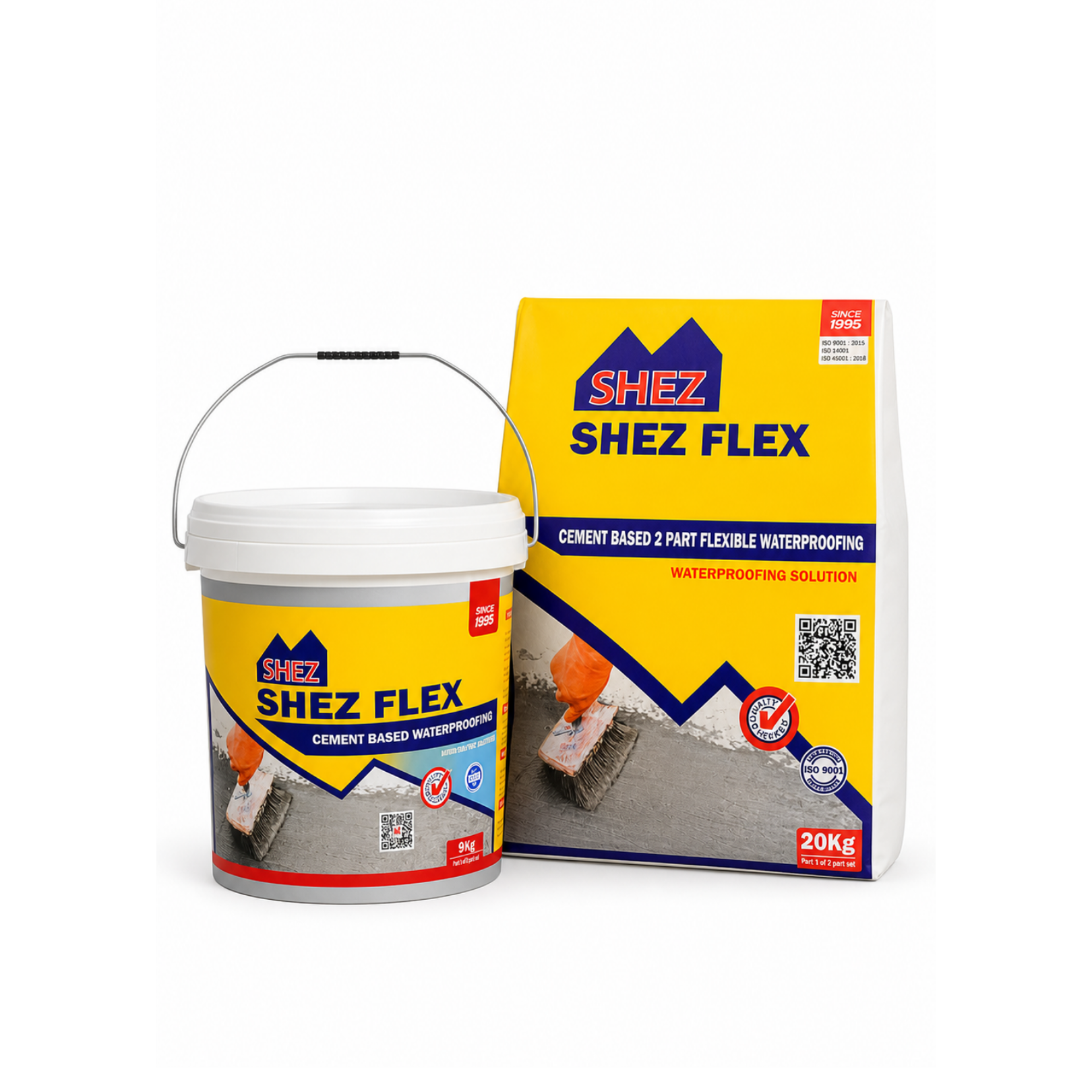
For example, H.E. Engineering lists flexible two-part cementitious waterproofing for toilets and balconies and suitable waterproofing systems for swimming pools. The adhesive is then selected as part of the compatible finished system.
Factor 5: Substrate condition
Tile adhesive performs only as well as the surface beneath it. The substrate should be sound, clean and sufficiently cured, with contaminants and weak material removed.
Cracks, excessive movement, dust, laitance and poorly bonded existing finishes can all reduce performance.
If tiles are being installed over a waterproof membrane, confirm that the adhesive is compatible with that membrane.
Factor 6: Movement
Every tiled surface experiences some movement. Large floor areas, external terraces, façades and areas exposed to temperature changes require careful movement-joint design.
A stronger adhesive does not eliminate the need for movement joints. If the building moves and the finish has nowhere to accommodate that movement, stresses can cause cracking or debonding.
Why surface preparation matters
A premium adhesive applied to a dusty or weak substrate can still fail.
Preparation may include:
- removing dust and debris
- eliminating oil, curing compounds or contaminants
- repairing weak areas
- correcting excessive unevenness
- allowing new screeds or concrete to cure appropriately; and
- applying primers where required by the system.
Follow the product data sheet rather than improvising site procedures.
Correct mixing matters too
Adding excessive water can make a cementitious adhesive easier to spread but may reduce its intended properties.
Use the specified water ratio, mixing time and rest time. Do not re-temper material that has exceeded its usable pot life by adding more water.
Trowel technique and coverage
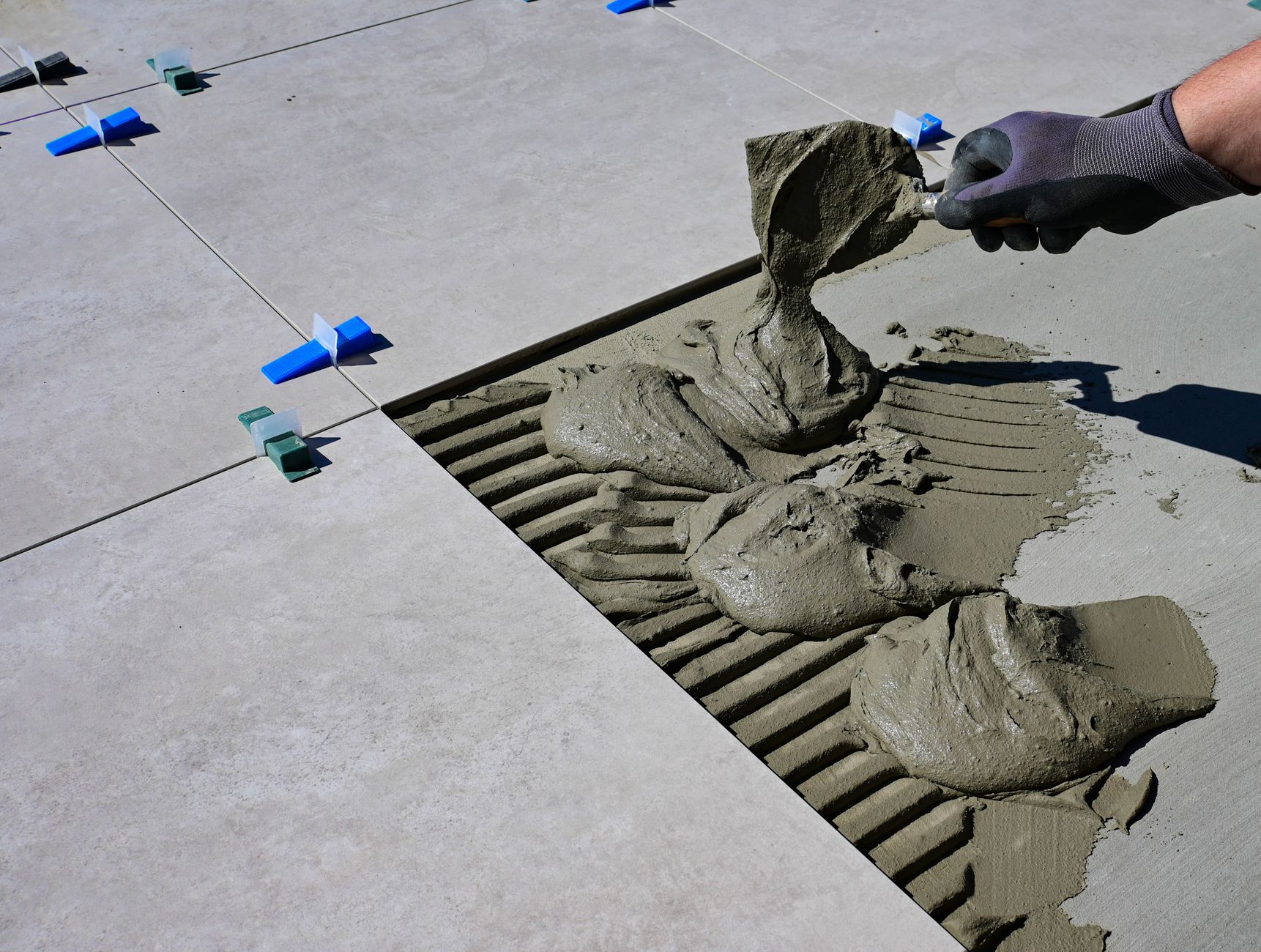
The objective is not simply to create attractive adhesive ridges. The tile must achieve sufficient contact with the adhesive.
Comb the adhesive consistently and press the tile so that the ridges collapse. For demanding or large-format applications, back-buttering may be required according to the system and specification.
Periodically lift a freshly installed tile to verify coverage rather than assuming it is adequate.
Common tile installation failures
Hollow-sounding tiles
These can indicate voids or poor contact, although sound alone is not a complete diagnostic test.
Tiles sliding on walls
The adhesive may lack suitable non-slip properties, be mixed incorrectly or be applied too thickly.
Debonding
Possible causes include contamination, insufficient coverage, incompatible substrate, movement, premature loading or unsuitable adhesive.
Cracked grout and tiles
Movement, substrate cracking, inadequate joints or structural effects may be involved.
Water leakage
Do not assume the adhesive or grout is the waterproof layer. Wet-area waterproofing should be addressed separately.
SHEZ and H.E. Engineering
H.E. Engineering supplies construction chemicals across categories that include tile adhesive and tile grout, waterproofing, concrete repair, grouting, industrial flooring and protective coatings. Its in-house SHEZ brand is manufactured in Sri Lanka under quality-controlled production.
For a project, the important step is to match the product specification to the tile, substrate and exposure rather than choosing from the category name alone.
Frequently asked questions
Can I use the same tile adhesive indoors and outdoors?
Only if the specific product is rated for both applications and suits the tile and substrate.
Is tile adhesive waterproof?
Do not treat tile adhesive as a replacement for a dedicated waterproofing system in wet areas.
Why do large tiles need more care?
Their size makes substrate flatness and full adhesive contact more difficult to achieve, while their weight and low porosity can place greater demands on the adhesive.
Can tiles be fixed directly over waterproofing?
Often yes, when the waterproofing and adhesive systems are designed to be compatible. Follow the specified build-up.
Final thought
Good tiling is a system: substrate, waterproofing where required, adhesive, tile, grout and movement joints all have to work together.
For product selection or a technical recommendation, H.E. Engineering can advise on SHEZ construction chemicals and compatible systems for residential, commercial and industrial applications.